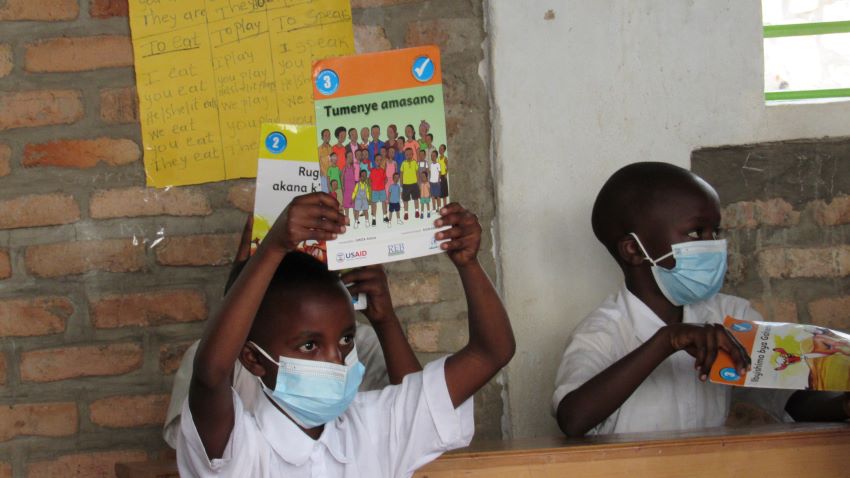
Two projects with a budget of 49.8 billion Rwandan francs have just been launched simultaneously. They will provide basic skills to young learners with the support of USAID. There is no room for failure.
With funding from USAID, the United States Agency for International Development, the Ministry of Education is implementing two reading literacy projects over five years.
“Tunoze Gusoma” or Let’s Improve Reading and “Uburezi iwacu” or Education in Schools and Communities are intended to promote inclusive learning of reading in the mother tongue at pre-primary and lower primary levels.

With these two projects, the Secretary of State in charge of primary and secondary education, Gaspard Twagirayezu, aims for 100% success.
“These projects will not have targets of 60%, 80 or 99. Any child who cannot read and write will be a failure for us all. It takes the contribution of all, parents, teachers and every Rwandan,” said Gaspard Twagirayezu.
2 million children are targeted for daily activity. “With parents at home, children will have to read every day to improve their reading skills,” said USAID country Director Jonathan Kamin.
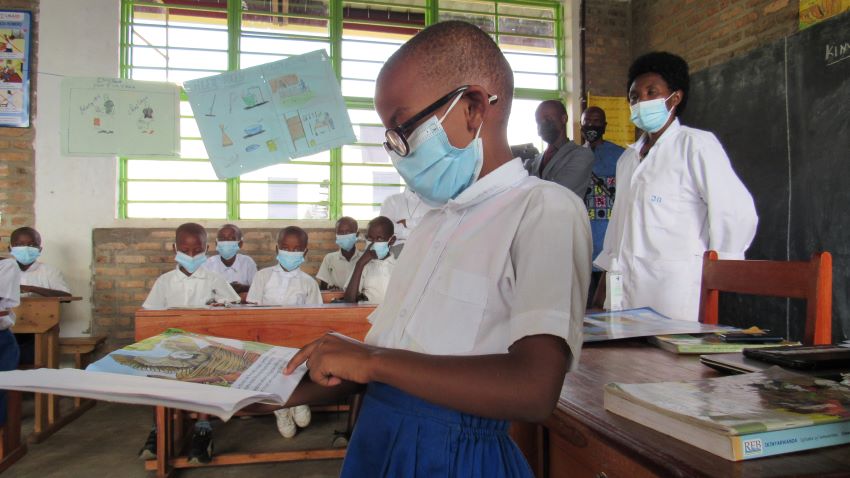
The Secretary of State for Primary and Secondary Education, Gaspard Twagirayezu, stresses the importance of this activity. “Reading skills are prerequisites for lifelong learning,” says Gaspard Twagirayezu.
“These two projects aim to create the right conditions for learning at school and at home,” says Twagirayezu. They contribute to helping children learn to read and write in Kinyarwanda.
The Tunoze Gusoma project will be implemented by FHI 360. It aims to build the capacity of schools in Information and Communication Technology (ICT) and coordination between parents and schools. The aim is to promote reading. The NGO is also responsible for the distribution of reading materials.

World Vision will implement the “Uburezi iwacu” project. It will operate at family and community level. Its role will be to increase the community’s engagement in learning to read and write. He will have to improve the working environment at home.
“With everyone working together, we can build a better future for children and the country,” says Jonathan Kamin, USAID Rwanda’s Director.
Gérard Rugambwa