


Conventional machining techniques work by removing material. In 3D printing technology, thin layers of material are successively superimposed.
A 3D printer is mainly built around a printing device. It deposits material, such as molten plastic. This material is added to the previous layer and becomes solid again. It gradually creates the relief. This finally gives the desired shape to the object. Briefly, this is the technology that can be used by some of the young students in Kigali.
The Rwandan National Commission for UNESCO, in collaboration with the Ministry of Education, has just launched such training courses for young students in Rwanda. Experts from Kenya introduced students from 20 schools in Kigali to 3D technology before continuing in the provinces.

The trained youth are ready to help their classmates. They have acquired the necessary skills. “We start with the design of the object to be produced,” says Mugabe Innocent Charles from Lycée de Kigali.Kigali. “Then we record the image on a flash disk or memory card. We introduce it into the 3D printer. A small box called a ‘BLB’ allows you to print the desired object,” Mugabe explains simply.
The technology has many applications. For example, if an artist wants to sell his work around the world, he can use 3D printing. It allows for reproduction. It also allows you to create new shapes. For the production of larger objects, the principle is the same. A giant 3D printer is used.
According to Paul Mukunzi, Managing Director of Rwanda TVET Board (RTB), such training fits well with the Science, Technology, Engineering and Mathematics (STEM) curriculum. “With such training, learners put into practice the theories they learn in class,” says Paul Mukunzi.
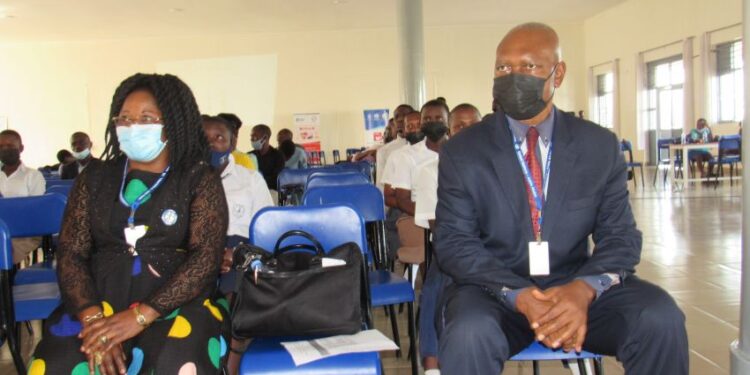
“Our children are gifted. They need enough materials. In addition, they need to keep up with technology,” he says.
The demonstrations by the students showed prototypes of some of the materials. The next step will be to find the means for mass production. Paul Mukunzi reveals that an innovation support fund will soon be created. It will finance such projects whose objective is to put on the local and international market industrial products designed in Rwanda.
The long-term goal is to achieve the Sustainable Development Goals (SDGs). These include the fight against poverty and climate change, access to quality education, decent work and the promotion of economic growth.
Gerard Rugambwa


