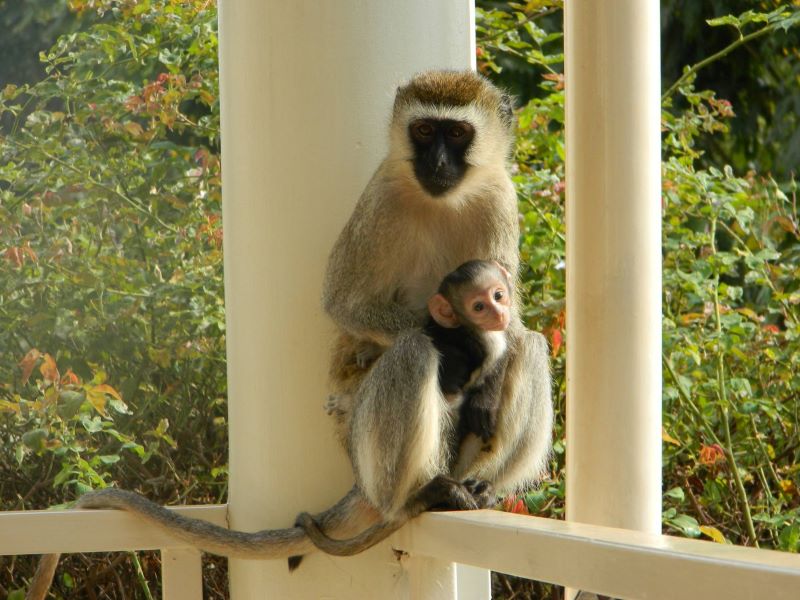
The Rwanda Development Board (RDB) advises residents of Huye town to avoid familiarisation with wild colobus monkeys by touching or feeding them. This makes them more likely to frequent populated areas in search of food.
People in the city of Huye, Southern Province, often come across bands of monkeys, of the colobus species (chrorocebus pygerythrus), in the streets and avenues of the city’s neighbourhoods. These wild animals roam freely in inhabited areas and are a serious problem. They destroy plantations and steal fruit.
Télesphore Ngoga, a nature conservation analyst from RDB, reassures that a sustainable solution is being considered. “We are aware of the material damage caused by these colobuses to the population. Until a sustainable solution to this problem is found, we ask the population not to become familiar with these animals by feeding them, as this pushes them out of their wild habitat and into populated areas,” said Telesphore Ngoga.
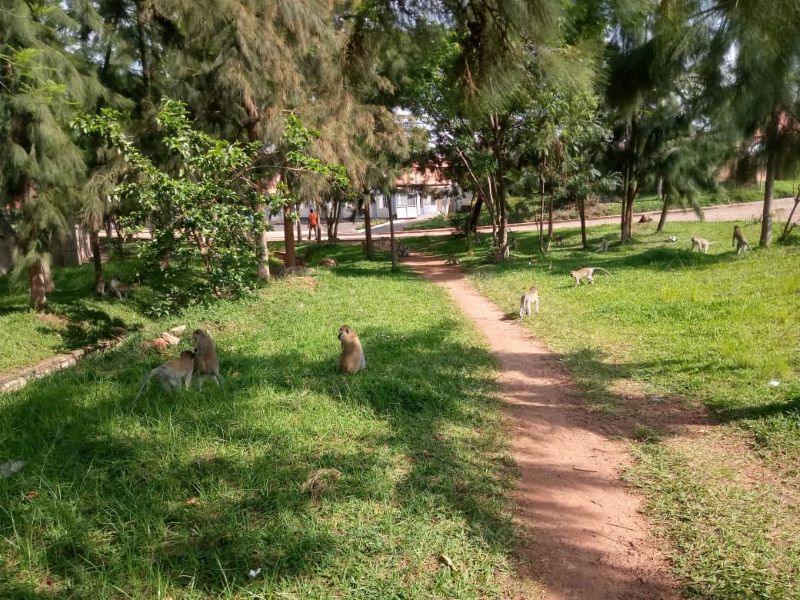
The mayor of Huye district, Ange Sebutege, says the monkeys normally live in the Arboretum forest overlooking Huye town. They come out to search for food in the inhabited areas. “In collaboration with our partners, we are looking for a sustainable solution that protects the inhabitants of the town and their property on the one hand, and respects good conservation of biodiversity on the other,” says Mayor Sebutege.
Colobus coexist peacefully with humans
The people of Huye say that these colobus monkeys are usually harmless. But when they arrive in a maize or bean plantation, they eat everything and cause huge losses to farmers.
“Usually these colobuses don’t attack humans. But they don’t run away either. When you pass by them and you happen to have some fruit in your hands or in a basket, you hide it by covering it with a loincloth. Otherwise they run after you and try to steal them,” says Chantal Ingabire, a fruit seller, as she throws a banana to a small colobus sitting on the side of a road. The road runs through the forested area of Huye’s university campus.

Residents growing maize or beans hire guards to watch over the fields throughout the day until the harvest. “We have adapted to their presence. They are otherwise protected animals, we leave them alone,” says Chantal Ingabire.
Eugénie Niragire, for her part, believes it is time for these animals to be placed in an isolated and enclosed area. Her maize plantation was recently damaged by the monkeys.
They have been living with the population for several years. RDB says it has not yet recorded any aggression against humans.
The population of these colobus monkeys is not yet known precisely because there has not yet been a census. But the inhabitants of the town of Huye estimate that they number in the thousands. They are seen daily, grouped in gangs of hundreds, in the neighbourhoods of Cyarwa and Tumba, the university district and the residential village of Taba.
Domice Gasarabwe & Gerard Rugambwa