


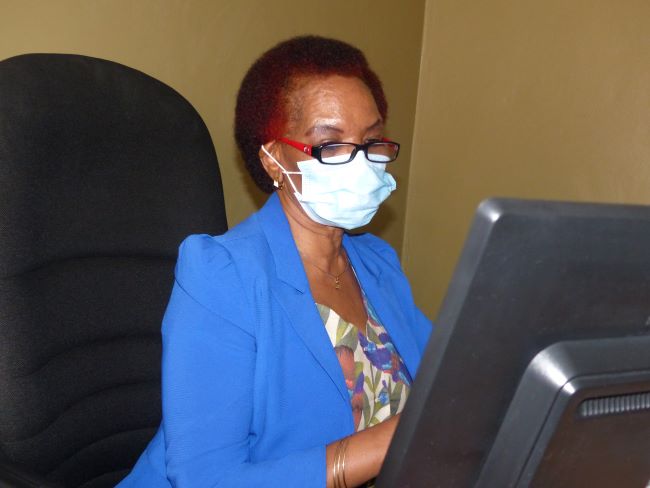
Some people often use antiseptic soaps for a variety of reasons. For Dr Françoise Gahongayire, Dermatologist-Aesthetician, the use of such soaps is to be banned… Otherwise, the skin risks being infected by bacterial diseases such as impetigo, which is highly contagious.
Le Canapé: What are the bacteria that can cause contagious skin diseases?
Dr. Gahongayire: There are many bacteria that can cause skin diseases, especially staphylococci, and even streptococci. These are the two big germs that come into infection in the skin.
Le Canapé: Is it possible to know which diseases are caused by these bacteria?
Dr. Gahongayire: There are several diseases that are caused by these germs. For example, diseases that come immediately infectious with bacteria. Others can be superinfected because of the handling of lesions that are not treated or are not treated very well. This means that people can use a lot of medicines that are not indicated or they can use traditional medicines. This can cause superinfection of those skin diseases that were not treated, so there were no bacteria before.
On the other hand, there are other lesions that occur right away with bacteria. For example, folliculitis in men’s beards. There is one disease I insist on, which is very contagious, it is especially in children, what we call impetigos, they occur in children with infection. It’s really common in children. We really have a lot of children with impetigos.
Le Canapé: What is impetigo?
Dr. Gahongayire: It is a disease that occurs on the skin right away with superinfection. They attack children but also adults with a rather weak immunity. This is the case of the elderly, those who suffer from chronic diseases such as diabetes, because their immunity is diminishing. This disease occurs immediately with infection, with a collection of pus. If it starts with a single lesion, others gradually grow, and all this becomes infections. This is why it is often recommended to visit the doctor as soon as possible, because it leaves bad scars, which are called indelible scars. The longer you drag on with the disease, the more lesions you have and the more scars you will have.
Le Canapé: What are the symptoms of impetigos?
Dr. Gahongayire: They are small daytime blisters but they contain pus. So you have to be a real connoisseur, because the liquid inside gets cloudy quickly, so it becomes infectious, the contents become yellowish with pus. When patients come for consultation, you see different kinds of wounds. In reality, it is these small vesicles that swell because they contain pus, and then they open up. When they open, they leave small wounds.
Often people don’t recognize these diseases. That’s why I recommend visiting the doctor. It is someone who can quickly recognize the disease before it spreads to avoid bad scars that remain indelible.
Le Canapé: How is the contamination done?
Dr Gahongayire: Contamination is done by self-contamination. When it opens, the liquid that comes out contains germs and it becomes contaminated, it crashes, what is called auto inoculation. Contamination can also occur through contact, from one person to another.
Le Canapé: How to prevent this extremely contagious disease?
Dr Gahongayire: There is no way to prevent impetigo. I talked about immunity, the weakness of the body. It makes one avoid using a lot of antiseptics on the skin so as not to weaken the protection on the skin. Some people use soaps like Dettol, Protex and other antiseptics, for me it is to be banned. This disease, like most others, can be prevented by a good diet that contains a lot of vitamin C to strengthen immunity. Rest is also necessary for good health.
Gérard Rugambwa


