The Director General of Basic Education in Rwanda (REB), Dr Nelson Mbarushimana, has called on Francophone journalists to support the Ministry of Education in its mission to educate.
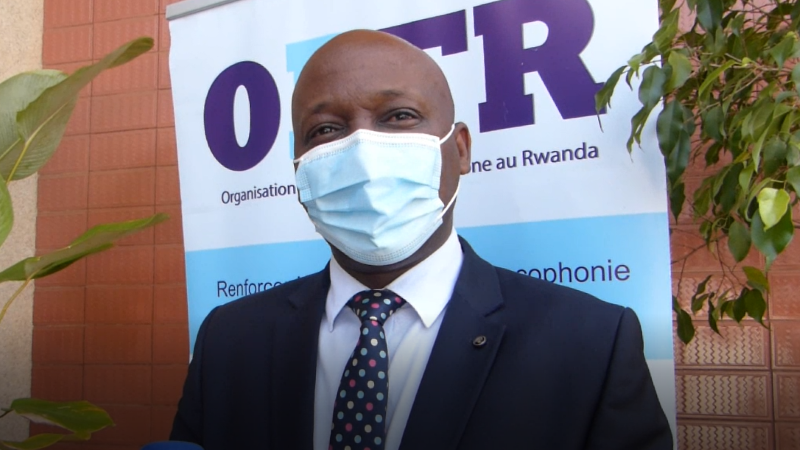
On the occasion of a training on journalistic writing organized by the Organisation de la Presse Francophone du Rwanda (OPFR), the Director General of Basic Education in Rwanda (REB), Dr Nelson Mbarushimana called on women and men of the media to support the MINEDUC in its responsibilities.
“I appeal to all journalists, convinced of their main mission to educate the public, to support the ministry in the accomplishment of its mission,” said Dr. Nelson Mbarushimana.
This mission remains mainly that of providing learners with the necessary skills for the socio-economic development of the country.
As far as the French-speaking press is concerned, it is difficult to respond effectively to this call because French-speaking journalists have become very rare on the job market.
“A large part of the Rwandan population speaks French. There should also be enough journalists capable of producing news and programs in French,” suggests Jeanne Kandama, Legal Representative of the Organisation de la presse francophone au Rwanda (OPFR).

“With the internet, the audience has gone beyond our national borders,” Kandama said. “The Rwandan journalist has to address the whole world. For French speakers, wherever they are in the world, we must be able to give them content in a correct language,” insists Kandama of OPFR.
Ways out of the language proficiency problem
At the University of Rwanda, the new students they receive are not able to follow courses in French. The blame is placed on secondary education.
“80% of students graduating from secondary schools and going to the University of Rwanda are not able to express themselves in French. To teach them the language, you have to start from scratch,” says Janvier Namahoro, a lecturer at Center for Language enhancement of University of Rwanda.

For the Director General of Basic Education, Dr Nelson Mbarushimana, the Ministry of Education is making every effort to ensure quality education.
“If there is an investment that needs to be made, it is to train people who can express themselves in a language,” says Dr Nelson Mbarushimana. “We are doing our best, we are giving what we can give in terms of producing curriculum that foster this French learning environment,” says Dr Mbarushimana.
“The hours devoted to French language instruction have been increased on the timetable,” he adds. “I am sure that our students will be able to express themselves better in French,” he says.

In addition, Rwanda is preparing to welcome 70 French expert teachers for the start of the next school year. They will be sent by the Organisation Internationale de la Francophonie (OIF). More than 20 are already working in teacher training colleges (TTC).
These measures, while good, will yield results in the long term. To remedy the situation in the media sector, Jeanne Kandama proposes that the competent authorities strengthen the capacities of journalists in the use of the French language.
One of the missions of the Organisation de la Presse Francophone au Rwanda (OPFR) is to make information in French much more accessible and understandable to the public.
Gérard Rugambwa