The Rwandan Red Cross (RRC) celebrated World Red Cross and Red Crescent Day on 8 May under the theme, “Together we are unstoppable.” It is an opportunity to think about the founder of the Red Cross movement, Henry Dunant, and the volunteers and other workers who cannot be stopped in their commitment to save human lives.
Every year, all over the world, 8 May is celebrated in memory of Henry Dunant, the founder of the Red Cross and Red Crescent movement. He was born on the same date in 1828, 193 years ago.
Addressing the national press, the Secretary General of the Rwandan Red Cross (RRC), Apollinaire Karamaga, said that the Red Cross is unstoppable in its action. “It is obvious that the Red Cross is unstoppable in its action to save human lives thanks to its principles,” he said.
The fundamental principles of the Red Cross and Red Crescent movement are seven. They are humanity, impartiality, neutrality, independence, voluntary service, unity and universality.
These principles provide an ethical, operational and institutional framework for the work of the Red Cross and Red Crescent Movement throughout the world. They provide a guideline for the Red Cross and Red Crescent movement to intervene on behalf of people in need, particularly during armed conflict or natural disasters.
According to the Secretary General of the Rwandan Red Cross, Apollinaire Karamaga, the Red Cross movement is also unstoppable because of its heavy responsibilities. Its emblem, the Red Cross, allows it to enjoy its right to go wherever its intervention is needed.
Celebration in a context of health crisis
The Rwandan Red Cross (RRC) is active in the fight against the covid-19 pandemic. According to Apollinaire Karamaga, RRC agents and volunteers are all over the country mobilizing to prevent the spread of the coronavirus.
During the lockdown period, food, hygiene materials and even money were offered to the population living on a daily basis in all provinces and the city of Kigali. Over 80,000 families were supported.

Several other interventions in favour of the vulnerable continued during this year 2020-2021. Some of these include support to Congolese refugees in Nyabiheke camp and members of the host community. The Burundian refugee camp in Mahama was also supported. The beneficiaries have been grouped into agri-breeding cooperatives and introduced to the culture of savings.
Among the major projects, Mr Karamaga mentioned support for historically marginalized people.
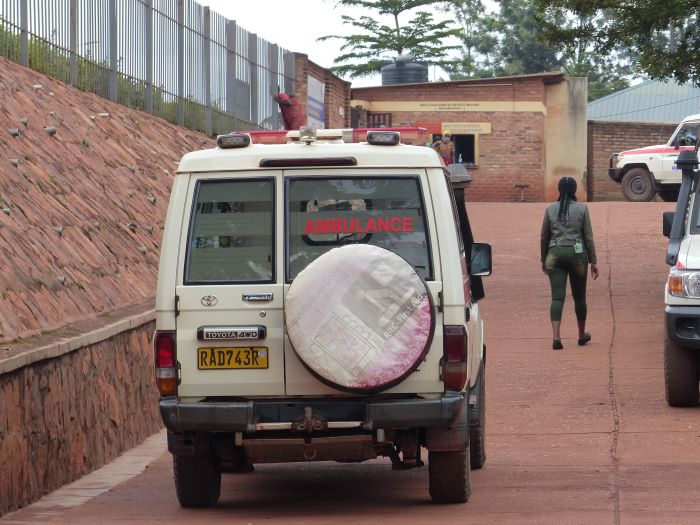
An ambulance service is operational in Gisagara, Bugesera and in the Mahama refugee camp. Model villages have been set up across the country. The aim is to promote the socio-economic well-being of vulnerable populations.
Gérard Rugambwa