After one year of existence, the Gisagara Model Village Project of the Rwandan Red Cross (RRC), targeting the Mukindo sector, is starting to show tangible results. Living conditions are gradually improving.
This Gisagara Model Village Project (GMVP) of the Rwandan Red Cross (RRC) operates in 5 villages of the Mukindo sector. It focuses on hygiene, nutrition, disaster prevention and management, health insurance, mutual insurance and the fight against the covid-19 pandemic.
According to Damas Ndebwohe, the project’s field officer, social transformation is the long-term goal. But some changes, particularly in nutrition, are already having a positive impact.
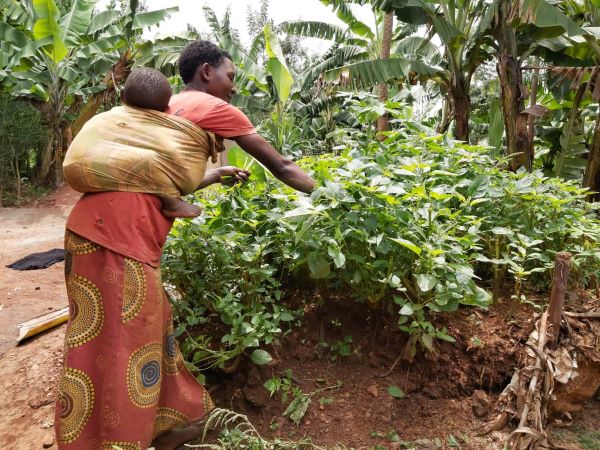
Josephine Nyirabanani, a 24-year-old mother of two, already sees the importance of a vegetable garden. “The Red Cross encouraged us to maintain a vegetable garden around the house,” she says. “My family used to have to buy vegetables from the market. But since we have a vegetable garden, I mix them with beans. Before, 1 kg of beans was eaten for 3 days. But now we eat it for a whole week because it is mixed with vegetables,” she says.
Damas Ndebwohe, reveals that in each village of Mukindo there are 5 model vegetable gardens. “People from each village visit these model gardens as part of the project’s outreach,” Ndebwohe explains the purpose of the model gardens. “Now every household has a vegetable garden,” he adds.
The operation of the gardens is accompanied by a mobilisation for a balanced diet. “We organise explanatory sessions on balanced nutrition, its composition and a culinary demonstration,” says Ndebwohe. “People have learned how to prepare a balanced diet from local agricultural products,” he says.
Fruit trees, plums and maracuja, were also planted at a rate of two per household. “The aim is for the children to grow well and to have a balanced diet,” says Ndebwohe.
About 5 million already saved by the vulnerable
The project has helped this population in the creation of Voluntary Savings and Loans Associations (VSLAs). 16 have been created, says Damas Ndebwohe. In their accounts are 4,958 million Rwf. For basic needs, members can apply for a small loan.
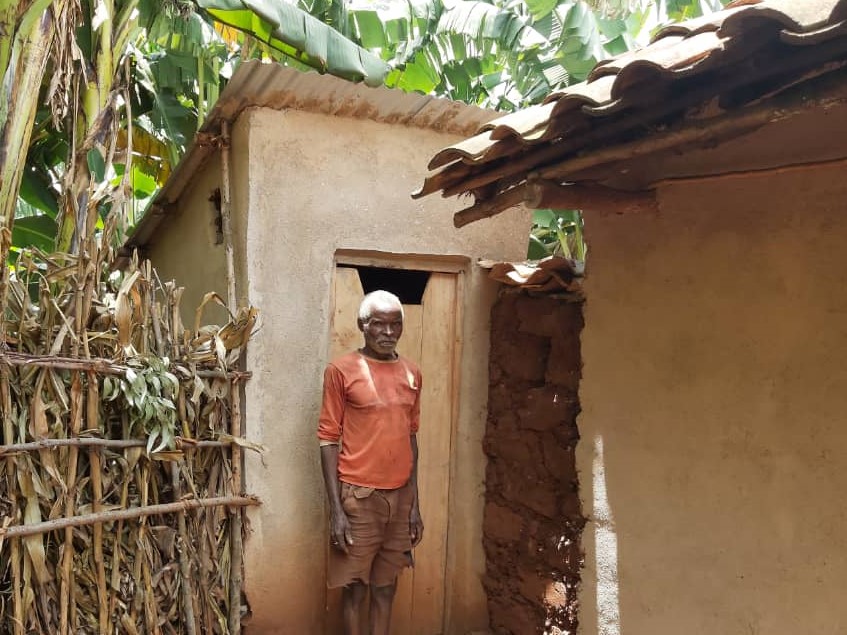
“I can no longer wear dirty clothes because when I don’t have soap, I can easily find it through VSLA,” says François Macumi from Rurimbi village. The 75-year-old can boast of having a good latrine thanks to the RRC, which attaches great importance to hygiene in rural areas.
“176 latrines have been built by RRC volunteers in these five model villages,” says project manager Ndebwohe. He explains that 50 volunteers had to be trained first, 10 per village. Their role is to mobilise the project’s beneficiaries for good hygiene.
CRR has targeted the Mukindo sector since May 2020, when it started its activities. According to Damas Ndebwohe, the choice of this administrative entity was dictated by the poor living conditions of the population.
“We chose the most deprived administrative sector. The RRC is always interested in the vulnerable in the location of its projects,” says Ndebwohe.
This Gisagara Model Village Project (GMVP) is supported by the Japanese Red Cross.
Gérard Rugambwa