The Rwanda Red Cross (RRC) has just disbursed 24 million Rwandan francs to help the victims of the disasters of about two months ago. The beneficiaries are from Mwiri sector, in Kayonza district, Eastern province.
Following a torrential rain and strong wind last May, 190 families in Mwiri sector, Kayonza district, had their houses destroyed, roofs blown away, toilets collapsed and banana trees broken or simply uprooted.
The Rwanda Red Cross, with the support of IFRC, offered 149,400 Rwf to each victim-family through cash transfer. Florence Umulisa, head of the emergency response and recovery service, reminds that this amount must be well managed.
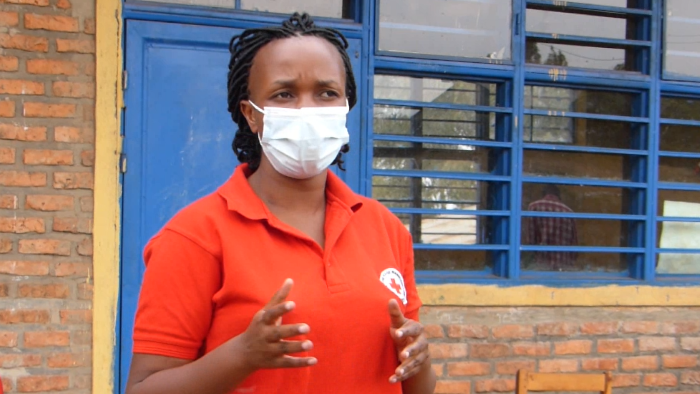
“This money will allow you to build latrines, but solid ones,” she urges this population without much means. “You should not come back for the same issue,” she warns. “This money can be used to meet other needs, including the payment of health insurance and mutual insurance,” she suggests.
Beneficiaries pledge to make good use of this opportunity
The victims, visibly grateful, pledge to spend the money wisely. “I will plant new banana trees, because they were seriously damaged. I will use fertilizer for good productivity,” promises Lambert Niyigaba of Nyakabungo village, Nyawera cell, Mwiri sector. “I was missing 7 metal sheets on my house following the violent wind in May. I will buy them, so my roof will be rehabilitated and my toilet rebuilt,” says Niyigaba. “I also plan to start raising small livestock. This will enable me to pay for health insurance, Mutuelle, in time. For this year, the bill will be paid thanks to this support from the Rwandan Red Cross,” he says, thanking this auxiliary organization of the state.
Gaudence Mukabisangwa of Agahiza village, Migera cell, Mwiri sector, while wishing blessings to the Rwandan Red Cross, wants to quickly get to work.

“As Rwandan Red Cross has given me this money, I will immediately start my project to build a decent toilet,” she says with determination. “My banana trees will be maintained for better productivity. I will also buy food, and then the kitchen will fall apart, so I will plaster it before the next rainy season,” she plans. “I sell some tomatoes and small fish. I plan to inject some money into my capital. This will ensure that I don’t run out of salt, soap and other basic needs,” she says.
Authorities in monitoring and awareness-raising
According to Jeanne d’Arc Muhawenimana, representative of Rwanda Red Cross Governing Board in Eastern Province on the Board, said that before the cash transfer operation, the volunteers, in collaboration with the grassroots authorities, sensitize the future beneficiaries for a judicious exploitation of this opportunity. The RRC then follows up with the local authorities.
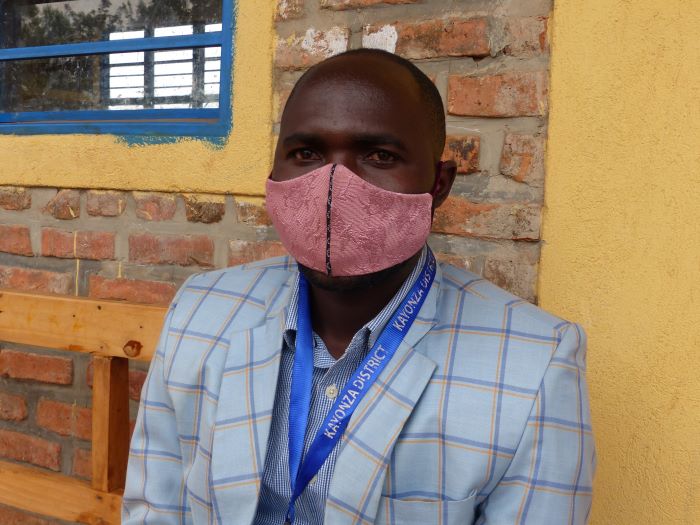
“190 families had their houses and toilets destroyed. All the victims were supported because they needed this support. We promise to follow up,” said Jean Damascène Ndabazigiye, in charge of administration and finance in Mwiri sector, Kayonza district.
In the past, the RRC’s intervention in this sector had focused on the transfer of cash to 275 families to support small income-generating projects. Hand-washing facilities were built in schools, 50 goats were given to poor families, 1,600 sanitary platforms (SanPlat) were distributed, 500 vegetable gardens were developed and toilets were built.

During this health crisis, a jeep from the RRC headquarters in Kigali, travels through the villages of Rwamagana and soon Kayonza to mobilize the population to prevent the spread of the coronavirus.
Gérard Rugambwa