The Ambassador of the French Republic, Antoine Anfré, visited on Wednesday 19 August the Westerwelle House of Startups in Kigali. He sought to understand what is being done by the private sector in Information and Communication Technologies.
Ambassador Antoine Anfré toured this startup house located in front of the Hotel Lemigo. He focused his attention on the MakerSpace Lab, Tactis and Group Vivendi Africa.
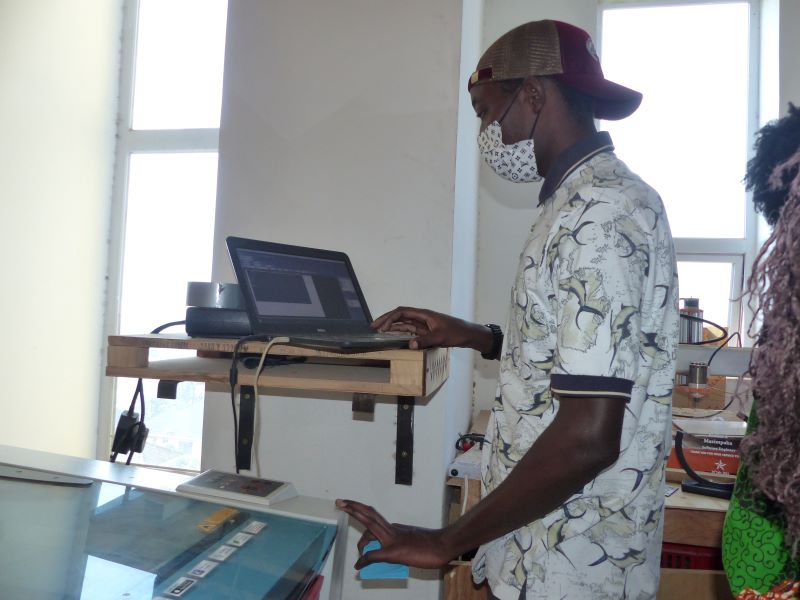
The MakerSpace Lab allows an entrepreneur to develop his idea without going abroad. Those who are creative come to exploit Westerwelle’s machines for innovation in different sectors. For example, they identify problems in hospitality, agriculture… and find solutions.
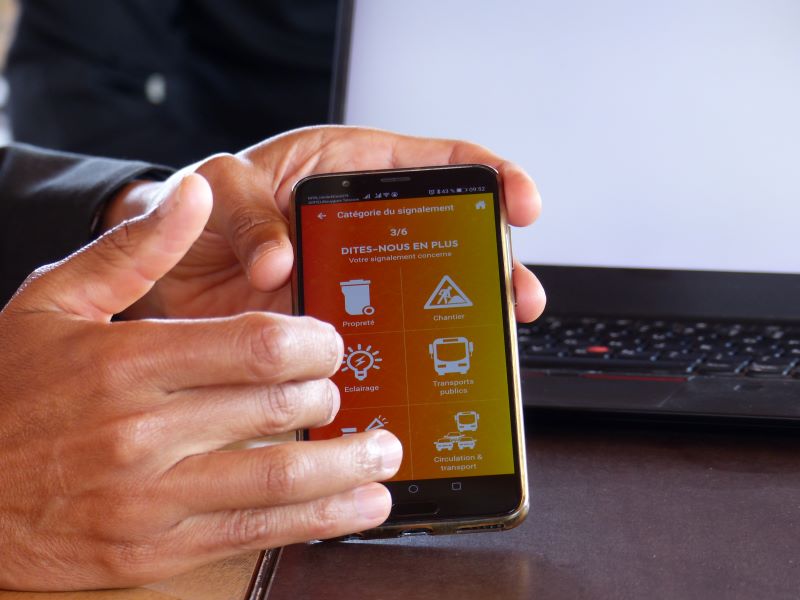
Ambassador Anfré then spoke with the director of the company Tactis in Africa and the Middle East, Bernard Binagwaho. The company is working on a citizen portal and sensor network project to monitor air quality in the city of Kigali. According to Binagwaho, Tactis has its sights set on the Democratic Republic of Congo (DRC), which is on Rwanda’s doorstep. The market there is larger and the French company could reap more profits.
Vivendi Africa’s CanalBox has not escaped Ambassador Anfré’s attention either. It offers very high speed internet connections with the use of optical fiber. For the moment, it is only the city of Kigali that benefits from its services. Soon, the city of Gisenyi, in the district of Rubavu will also be served.

Westerwelle house supports start-ups
The Westerwelle House in Kigali is an initiative of Guido Westerwelle, former German Foreign Minister. It houses several start-ups. It provides incubation programs. “We create programs for private entrepreneurs of startups, taking into account the level of their know-how,” reveals Sarah Rukundo, Managing Director of Maison Westerwelle Kigali.
“Young people come up with ideas that could address a specific problem facing the population. They then take the time to develop their ideas into something significant that can make a difference,” explains Sarah Rukundo. The House provides them with training opportunities. It connects them to successful mentors to learn from their experience. They find them partners in the private sector. The latter can give them a small amount of funding that can help them go all the way.
Another program at the House is funded by Make IT in Africa. “In this program, we support 20 startups a year that have solved a given problem and can go further,” says Sarah Rukundo.
A new Tech farming program with the support of Universcience, also a French company, in partnership with the French government, is also starting this year. It will select 15 agriculture text startups. They will have to find solution to specific challenges in the agricultural sector.
Westerwelle House offers startups a space and suitable working conditions to allow them to dig deep into their brains.
The House also creates events where experts are invited and give presentations on specific topics followed by discussions. In the end, networks are created.
After Westerwelle, Ambassador Antoine Anfré visited other private innovative technology companies. He had time to discuss with the Chamber of Information and Communication Technologies of the Private Sector Federation (PSF).
Gérard Rugambwa