The key in the hands of young people
For some time, the problem of unwanted pregnancies among young people has become a headache for Rwandan society. They have been increasing over time. However, efforts to reduce them to a bare minimum are important.
In 2016, unwanted pregnancies among adolescents amounted to 17,849. In 2017, there was a slight decrease. There were 17,337. The following year, 2018, the statistics reach 19,832. In 2019, the numbers soar. In the first half of the year alone, the figure had reached 15,656. Since then, unwanted pregnancies are no longer known in numbers.
The highest number of unwanted pregnancies is recorded for girls aged 19. They reach 15%. Most of the time, they come from rural areas and poor families.

When one tries to find out what has been done to help young people overcome this scourge, one is surprised at the work that has been done but which remains without much effect.
According to Dr Eliphaz Karamage, in charge of adolescent health at the Rwanda Biomedical Centre (RBC), several initiatives have been taken. Radio programs are regularly organized such as Urunama and Umurage. Two campaigns are planned each year in the country. Special meetings have been organized in all the universities of the country. The objective was to discuss reproductive health.
Religious denominations are also sensitized on the social problems caused by unwanted pregnancies. The aim is to make them less rigid in the use of contraceptive methods. Condoms and other means of prevention against unwanted pregnancies are made available to adolescents in health centers…

A national conference on sexual and reproductive health and rights
HDI organizes a conference of reproductive health stakeholders and service beneficiaries from 19 to 20 October. One hundred adolescent girls and boys are invited from all districts of the country. The aim is to promote discussions between the two parties to make sexual and reproductive health services for adolescents accessible.
For this non-governmental organization, the lack of information is at the root of the problem of unwanted teenage pregnancies. “If young adolescents are well informed, unwanted pregnancies will be greatly reduced. This is our belief,” said Dr. Aphrodis Kagaba, Director of HDI. For Dr. Aphrodis Kagaba, teenagers who get pregnant must not make the same mistake again.

“Before a teenage mother’s first baby is weaned, she is already knocked up for the second time,” said Dr. Aphrodis Kagaba, Director of HDI. “They are left to their own devices. Going back to school becomes almost impossible. Those who present themselves as ‘benefactors’ abuse them. They make them even more vulnerable,” he raises his voice, frowning.
Young people give ideas to break the deadlock
To everyone’s surprise, the young people reveal the flaws in the adults’ interventions. The health center would not be the ideal place to provide adolescent sexual and reproductive health services.
“Can’t we find another place to provide services?” asks Aïsha Uwamahoro. This young teenager from Nyarugenge blames health centers for seeking to enter the private lives of adolescent girls.

“When we go to the health center, instead of meeting our needs, we are asked a lot of questions about our sex life,” she says. “Sometimes we are told that we are still young to receive these services,” she complains. “We come back empty-handed and risk getting pregnant,” she reveals.
For Sandrine Muhimpundu from Bugesera district, unwanted pregnancies are due to lack of information. She accuses parents of not accompanying their children through the physical and psychological changes. Sometimes teenage girls may indulge in sexual relations due to a lack of information. They sometimes give in to men’s advances because of a lack of money.
“Adolescent girls should be given sufficient and reliable information,” she suggests. “We should be taught to rely on our own strength to solve resource problems. We can be supported in creating small income-generating projects,” she says.’
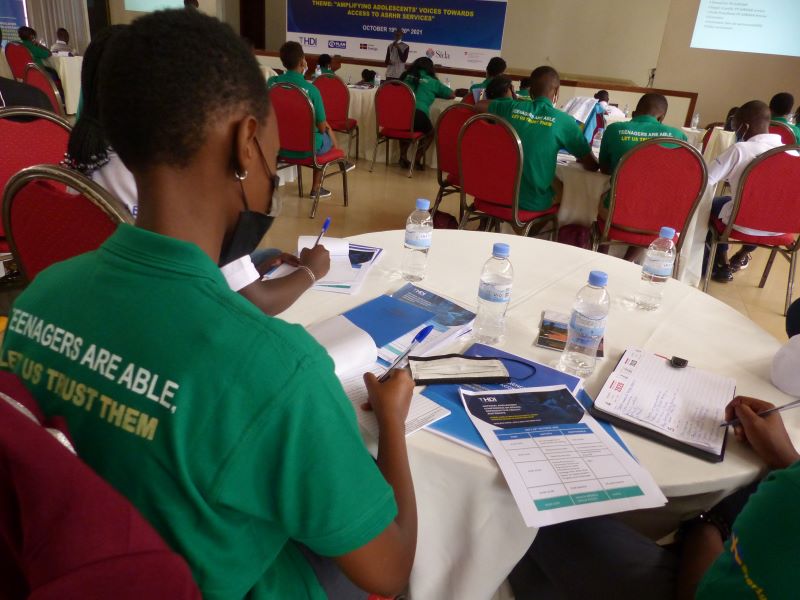
According to Sandrine Muhimpundu, information on adolescent reproductive health should be given by their peers at youth centers. “We can feel free and express ourselves more openly,” she says. “Even at the health center, our peers can be more effective than adults. You just have to provide a space for young people where they can feel free,” she insists on the need to keep adults away.
HDI Champions prove effective
HDI Champions are young students trained by HDI. They benefit from knowledge about their rights and sexual and reproductive health. They are chosen from among the others for their active participation. Teta Kevine is one of the teenagers elected to support HDI in its role of being close to young people. She has been assisting her peers for four years. She shares her experience.
“In my school, among my friends, among my entourage, when there is a problem of sexual and reproductive health, I intervene to give the necessary advice,” she reveals her role. “When the question of my interlocutor seems difficult to me, I indicate to him/her the 3530, a toll free,” she says.
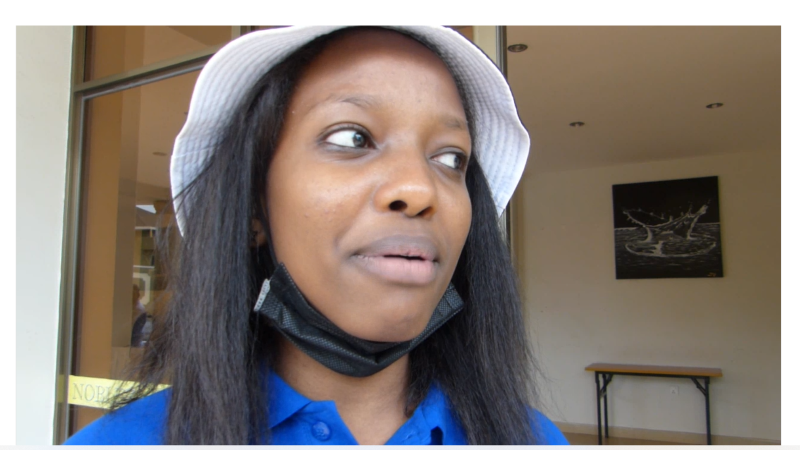
“I have already helped many young people. There are no less than 60 of them, and I don’t take into account the young people I visit in schools. I am only talking about classmates, friends and young people in my church,” she says.
“When young people talk to their peers, the message gets across better than between young people and adults. There is a sincere exchange,” she concludes.
Gérard Rugambwa