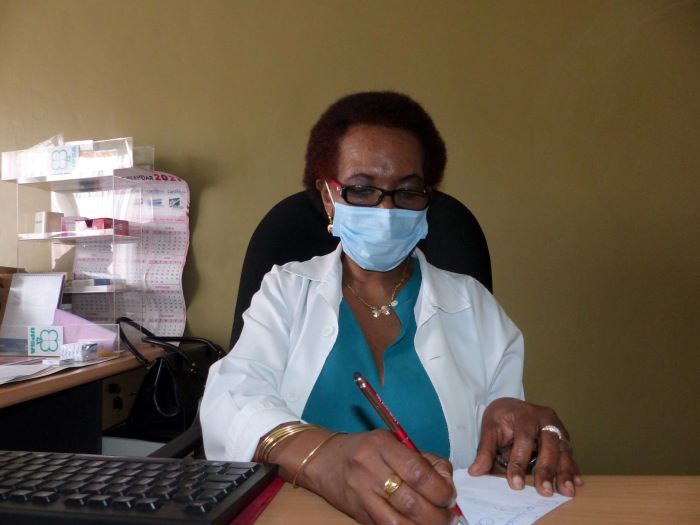
Molluscum contagiosum is a skin disease caused by a virus. Children with allergies can get this disease and it becomes chronic. Dr Françoise Gahongayire, dermato-aesthetician, tells us more in an interview…
Le Canapé: What are the symptoms of molluscum contagiosum on the body?
Dr Françoise Gahongayire: Molluscum contagiosum presents lesions on the body, small epidermal papules, superficial with an umbilical shape, as if depressed inside. It is a disease that can occur anywhere on the body. As the days go by, it gradually spreads throughout the body. And infection can follow.
Le Canapé: How do you get this disease?
Dr Françoise Gahongayire: These are pathologies that come with growth. They are often found in children because they generally have a low immunity. In adults, they are found in people suffering from other diseases such as renal failure. In atopic children, who have allergies, they are predisposed to suffer from this disease. It is even more serious because their skin is very sensitive. They tend to have dry skin and they don’t know how to take care of their skin.
Le Canapé: It’s also a contagious disease…
Dr Françoise Gahongayire: contagious diseases in dermatology are contaminated from one person to another or because of humidity. Often for viruses it is humidity. When a child is affected, there is a great chance that others in the family will be contaminated. At school, many children have molluscum contagiosum. It is contagious but it is really benign. It can become infected when you use indigenous medicines.

Le Canapé: How is the treatment done?
Dr Françoise Gahongayire: For the treatment, we do a curettage. We directly remove this papule. There are not many complications. When there is an infection, we treat it first. Afterwards, we do a curettage. As the lesions are superficial, this does not leave scars. But when the treatment is delayed, sometimes after the healing, the patient can be left with scars. There are many cases of molluscum, 4 to 5 children are treated every day.
Le Canapé: When should you seek treatment to avoid spreading to the whole body?
Dr Françoise Gahongayire: You have to get treatment quickly when you see a small papule on your body. Otherwise, they continue to grow on the body. You can easily have 20 lesions on the child’s face, even on the eyelids. When you get treated with anything or when you have touched it, it causes an infection.
Children with allergies come to the clinic most of the time with several lesions. You do a curettage today, and two months, three months later, the lesions come back. It ends up being chronic.
I always ask people to see the doctor whenever they see something abnormal on the skin.
Interview by
Gérard Rugambwa