


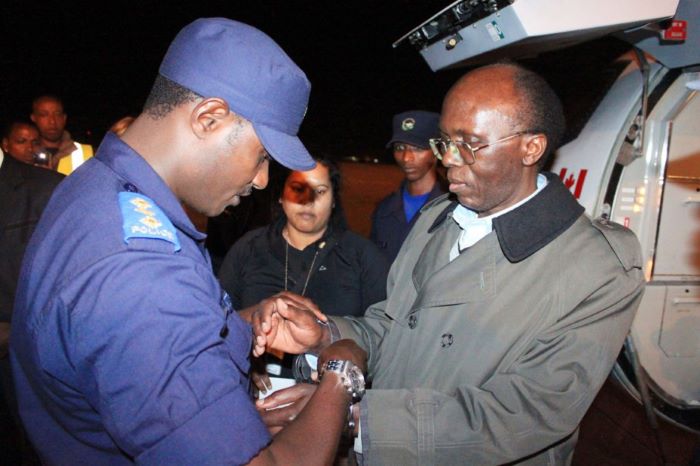
The Rwandan Head of State, Paul Kagame, in his speech on 7 April, returned to the issue of the trial of alleged genocidaires, which is long overdue in the countries where they have found refuge.
Rwanda has already issued more than 100 international arrest warrants around the world. The big fish are taking it easy in Western countries. Despite the existence of complete files to launch the trials, some host countries continue to procrastinate for unacknowledged reasons.
“We know of cases in capitals of developed countries that have been going on for almost 15 years,” said Paul Kagame launching the 100-day memory period.
Every time Rwanda submits an extradition request to these countries, it is rejected. It is essentially some European countries that Paul Kagame did not name.
We have seen alleged genocidaires extradited from the International Criminal Tribunal for Rwanda (ICTR), Canada, USA, Netherlands, Denmark, Norway and Germany. Some African countries such as the DRC and Uganda have also extradited genocidaires to Rwanda.
Countries such as England, France and Belgium which harbour a relatively large number of alleged genocidaires refuse to trust the Rwandan justice system.
The Rwandan judicial system has been reformed with the support mainly of the Netherlands. Trials are faster than before. Judicial personnel must meet certain criteria such as moral integrity and academic training. The death penalty was abolished in 2007, including for the crime of genocide. The penal code has been revised. Prison conditions have been significantly improved with the construction in 2004 of the Mpanga prison. It meets international standards.
Despite all these efforts, the position of these countries remains unmovable. “There are places where there are about 4-5 genocide suspects with very clear files. We have approached the country hosting them, we have begged them. We said, the files are ready, they are here, can you give them to us for the trial? The answer was no, we don’t have an extradition treaty, we don’t trust your courts, we don’t trust your laws,” says President Kagame.
To this lack of confidence in Rwandan justice, Rwanda proposes an alternative. It expresses the wish that such countries judge these alleged genocidaires themselves. “Because if you have a problem with our courts, you don’t have a problem with your own courts. And yet they still have excuses not to act. And it goes on and on and on,” says President Kagame, fed up with this behaviour.
The direct consequence of this protection of suspected genocide cases is the rise of denial and revisionism. And it will be very difficult to eradicate it as long as impunity persists.
Gérard Rugambwa


