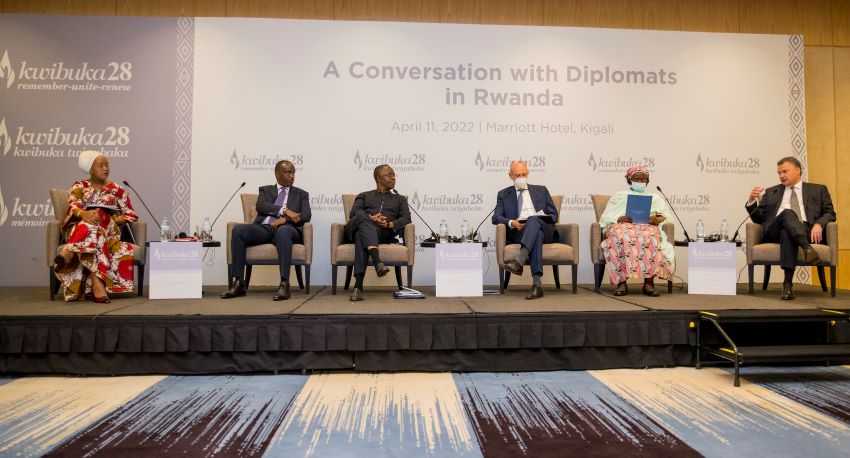
The French Ambassador to Rwanda, Antoine Anfré, reveals the willingness of his country’s judicial system to catch up with the trial of alleged genocidaires. This news was made public during a conversation with diplomats in Kigali on 11 April as part of a reflection on the 1994 genocide against the Tutsi.
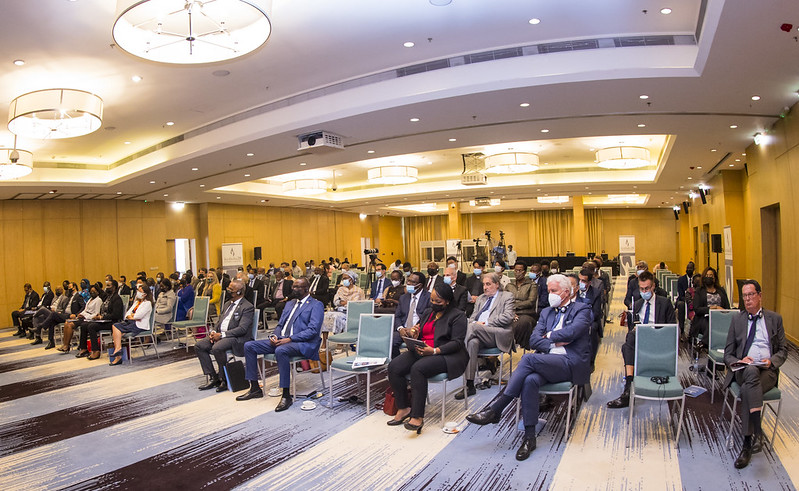
As part of the commemoration of the 1994 genocide against the Tutsis, the Ministry of Unity and Civic Engagement organized a conversation with Diplomats to reflect on the unspeakable.
During this dialogue without passions on either side, the Ambassador of the French Republic accredited in Kigali, Antoine Anfré, revealed the decision of the judicial system of his country to catch up with the trial of alleged genocidaires.

“In May, the trial of Laurent Bicyibaruta, former prefect of Gikongoro will be launched,” he said.
The opening of this trial is scheduled in one month. This is after the trial of Claude Muhayimana, a former driver in Kibuye. He was sentenced to 14 years in prison. He was found guilty of complicity in genocide. About thirty cases are in the hands of the French judicial system.
Dr Jean Damascène Bizimana, Minister of Unity and Civic Engagement, in his opening remarks, highlighted the persistence of impunity as one of the challenges the world still faces 28 years after the genocide against Tutsi..

According to Matthijs Wolters, the Dutch Ambassador to Rwanda, for serious international crimes, each country has the obligation to try the alleged perpetrators on its territory.
“Around 11,000 are believed to be still at large in some parts of the world,” he acknowledges. “There are sometimes real obstacles,” he says, which shows why trials are not moving fast. “For the Holocaust of the Jews, the last judgements are still pending,” he explains how long the procedures are in such trials.
But Rwanda is still asking anyone who will listen to it to extradite the alleged genocidaires for trial if the country hosting them cannot do so itself.. “Witnesses forget the facts due to age, others disappear,” argues Dr Jean Damascène Bizimana, Minister of Unity and Civic Engagement.

The Netherlands supports the trial on the territory where the crimes were committed. “It is beneficial for the country and the victims,” says Matthijs Wolters.
The conditions are right in Rwanda to try the alleged genocidaires. This was not the case after the 1994 genocide against the Tutsi. The entire judicial system had been destroyed.
Other equally important challenges remain. There is the qualification of genocide and negationism. For Dr Jean Damascène Bizimana, “We must act collectively by putting in place laws against these crimes,” he asks.
The Chamber of the Court of Appeal of the International Criminal Tribunal for Rwanda established in December 2006 that the 1994 genocide against the Tutsi is a fact of public knowledge that no one can dispute.
Gérard Rugambwa