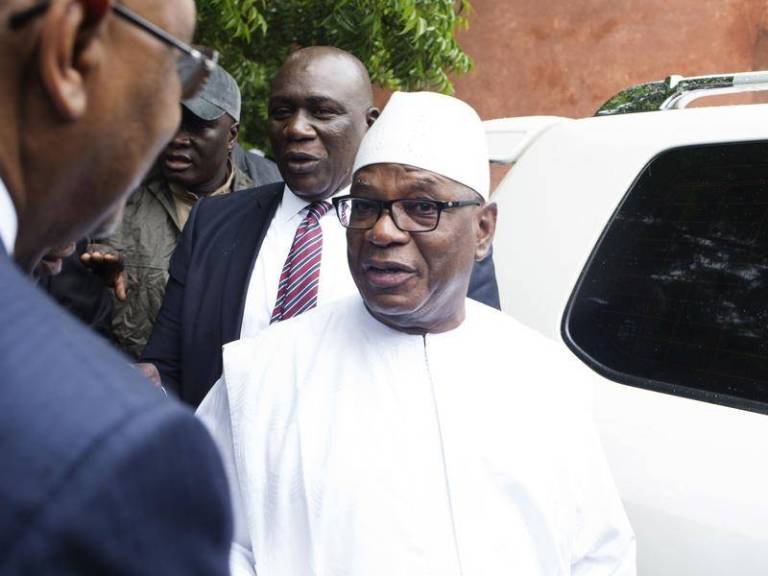
After the Malian military coup on Tuesday 18 August, former head of state Ibrahim Boubakar Keita announced his resignation in the evening of the same day.
Former Malian President Ibrahim Boubakar Keita (IBK) announced his resignation after seven years in power. “I don’t want blood to be shed to keep me in business. That is why I would like to tell you at this precise moment my decision to leave my functions, all my functions, from this moment on,” said IBK. The government resigns and the parliament dissolves.
The military who organized the coup forced IBK to resign. They claim that there was a coup d’état. “You should not confuse coup d’état with a coup de tête. A coup d’état is when there is a state in a country. But when there is no state, there are only heads at the head of the country, we only talk about a coup de tête. We change heads and the State will stay,” said Colonel Major Ismaël Wagué, spokesman for the National Committee for the Salvation of the People (CNSP) and Deputy Chief of Staff of the Air Force.
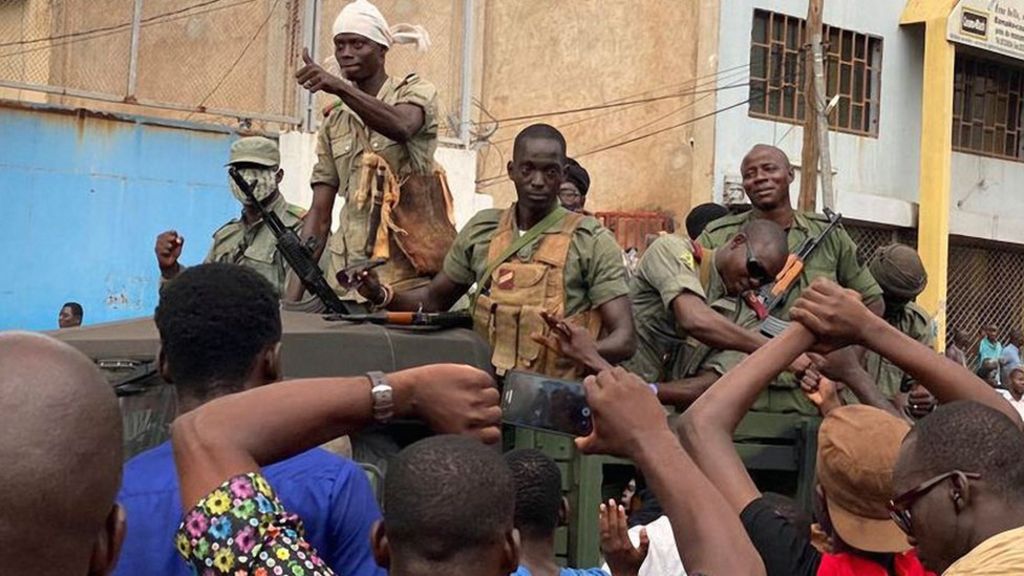
Condemnation of this “headbutt. »
The Economic Community of West African States (ECOWAS) has strongly condemned this “coup de tête. “It suspended the country. Neighbouring countries have closed the borders.
The French Minister for Europe and Foreign Affairs, Jean Yves Le Drian, “condemned this serious event in the strongest possible terms. »
The head of European diplomacy, Joseph Borell, “rejected any unconstitutional changes. »
The President of the African Union Commission, Moussa Faki, condemns the detention of former President Ibrahim Boubakar Keita, the Prime Minister and other members of the government. He calls for their immediate release. He calls for “respect for republican institutions. »
But all these condemnations should not last, because “The headbutt” has been transformed into resignation. Moreover, Mali’s new strongmen promise to organise new elections and to respect all international agreements.
Gérard Rugambwa