Civil society organizations welcome the development and distribution of the sexual and reproductive health curriculum in schools. However, they are asking for services to be accessible to everyone because this is not yet the case.
« We are not really asking for much, » said Dr. Athanase Rukundo, executive director of HDI. « The policy is there, but it needs to be implemented. The services are available, but we need to make sure that everyone has access to them, » Dr. Rukundo insists.
HIV prevalence in Rwanda is 3%. Among key populations, the rate is higher. For women, it is 35%. For the 15 to 19 year old age group, it is 6%. Among these young people, some became mothers at an early age. « If they had received information in time, they would not be in these conditions, » said Dr. Athanase Rukundo.
By law, children under the age of 18 must be accompanied by their parents to receive reproductive health services. Yet they are having sex without their parents. « Whether we like it or not, girls under the age of 18 are having sex, » said one girl. The consequence is either unwanted pregnancy or HIV/AIDS infection.
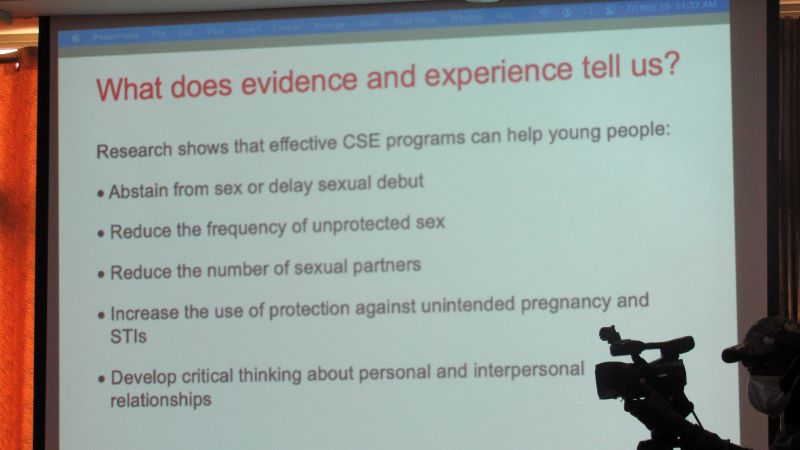 Between the ages of 20 and 24, the number of girls carrying HIV/AIDS is triple that of boys of the same age. One way to protect these children from HIV/AIDS, unwanted pregnancies and even gender-based sexual violence is to give them all the information they need.
« We are lucky, most of our young people are in school. If the available curriculum on reproductive health is well respected, and if the state invests the necessary means to build the capacity of teachers and religious leaders, we believe that the number can be reduced significantly, » said Dr. Athanase Rukundo.
Children in school spend a lot more time in school than at home. It is an ideal place to provide sexual and reproductive health services to young people. They are also enrolled at a very high rate (+95%).
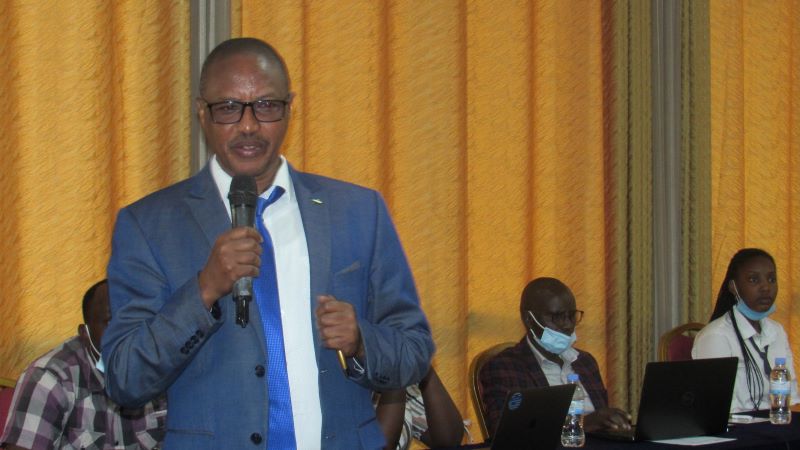
« In all schools, reproductive health services need to be available because most parents are not able to provide them, » said Eugene Ngoga, director of special needs at the Basic Education Board (BEB).
However, Mr. Ngoga sets limits to their intervention. « We give the necessary information on reproductive health. We also show the risks involved in engaging in sex. But condoms cannot be distributed in schools because sex is not promoted. To give a condom to a young person is to encourage him to have sex, » he reveals the position of the Ministry of Education.
An irreversible turn with a sexual and reproductive health curriculum
In Rwanda, an important step was taken in 2016 with the launch of lessons on reproductive health in schools. Adolescents can discuss it in class. The curricula were developed with the age of the learners in mind. These new lessons have been a game changer.
« The teachers have been trained and received instructions, » says Eugene Ngoga, director of special needs at the Basic Education Board (BEB).
« An evaluation has not yet been done. However, other partners confirm that there has been a significant change in the children, » Ngoga said.
In Rwandan society, very few parents can discuss reproductive health issues with their children. And since
teachers are also parents, it is obvious that they behave differently during such lessons. Some are more comfortable. Others are less comfortable.
The curriculum distributed in all schools would not be followed to the letter everywhere. Some private and religious schools are not completely compliant with the ministerial instructions.
For Eugene Ngoga, any democratic state must be characterized by a certain tolerance. « While respecting each other’s beliefs, science must still be given priority, » he said.
Gérard Rugambwa